
The Welsh Blanket
Part 1

A journey around the blankets of Wales, through time and place, in the company of weavers, curators and historians.
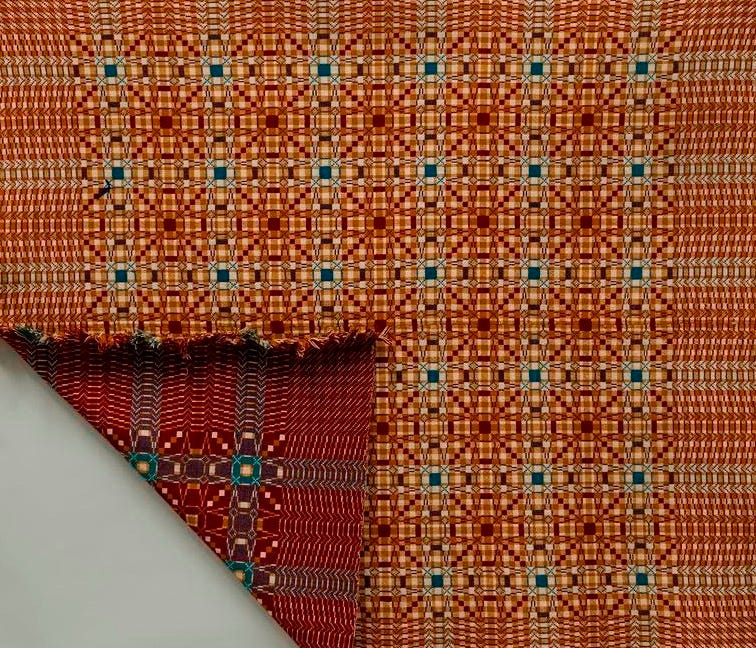
Few objects are as ubiquitous or as useful as a woollen blanket. Across the world, blankets are woven into the textile cultures of the places where they are made and, invariably, used. This is true of the blankets of Wales: traditionally woven in distinctive patterns and colours, bought and bartered in local economies, and gifted as kinship practices.
A double cloth bedcover, like this beautiful example woven by Lewis D. Jones of Lampeter, is produced by weaving two interconnected layers simultaneously, creating a thick, dense and usually reversible fabric. It is often called a carthen and was a customary wedding present, passed on to subsequent generations.
In 2025, Welsh double cloth weaving was added to the Red List of Endangered Crafts in the UK, and today there are only a handful of weaving mills producing these blankets.1 But the situation is more nuanced than a familiar story of manufacturing decline and displacement. The sale of Welsh blankets has shifted from the market stall to lifestyle retailers, and the demand for both new and vintage blankets is buoyant. Caught between heritage and modernity, today their uses and meanings are double-coded.
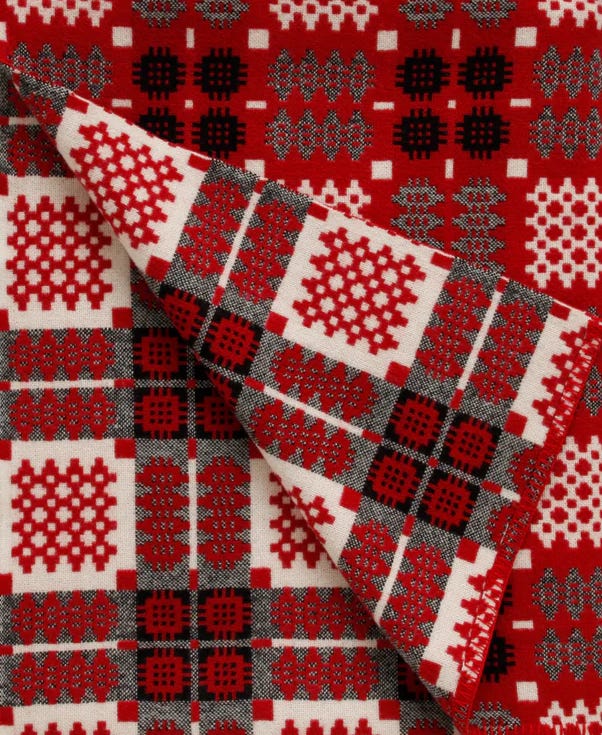
The idea of this Substack is to unpick some of these threads and to explore the design, production, use and meaning of Welsh blankets, both past and present.
The carthen woven by Lewis D. Jones is a particularly fine and intricate design, and is relatively unusual in being associated with a named weaver. Although specific designs were produced by particular mills, patterns were (and are) often anonymous, part of everyday material culture of the places where they were woven. In this sense, they are characteristic of the Welsh tradition of crefft: local, rural and vernacular.
Linked to the practice of crefft are the concepts of gwerin (folk) and lle (place). All three concepts have been used to frame the curation and interpretation of weaving as part of the national story - for example, at St Fagans National Museum of History where Lewis D. Jones’s carthen is now displayed.
My aim is to journey through the textile geography of Wales in the company of curators and historians, and some of the designers and weavers who worked for the woollen mills in the last century, including Marianne Straub, Alison Morton and Ann Sutton. How successful (or not) were their attempts to innovate and modernise?
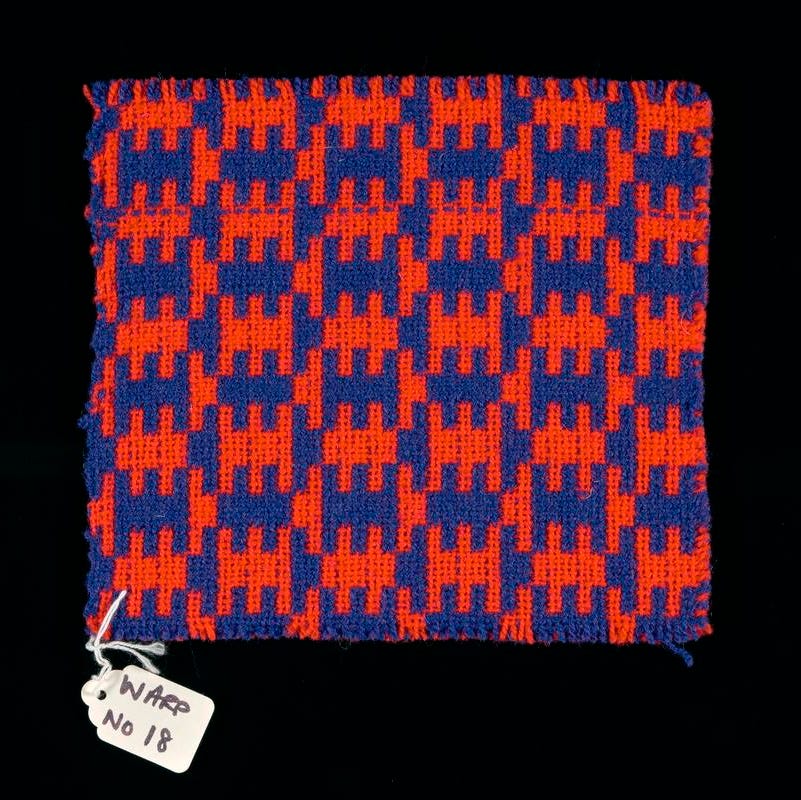
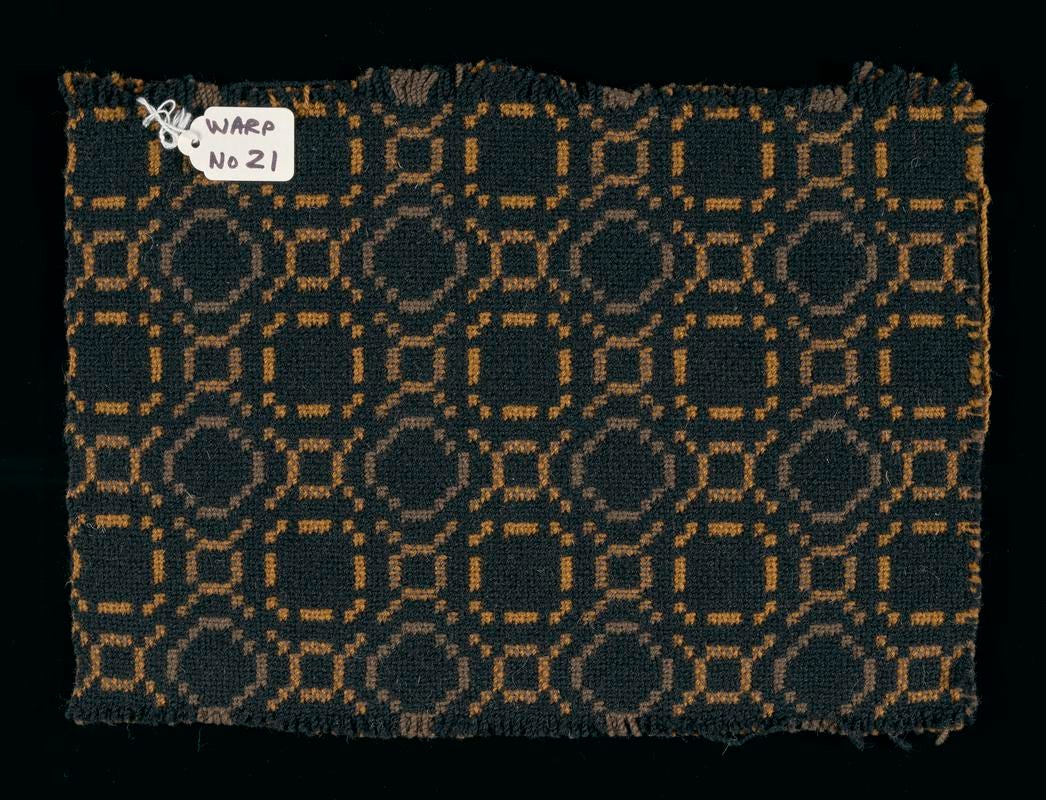
Bringing the story up to date, the purchase and resurrection of Elvet Mill, Carmarthenshire by Daniel Harris of the London Cloth Company is a striking rebuke to the apparent inevitability of further mill closures.
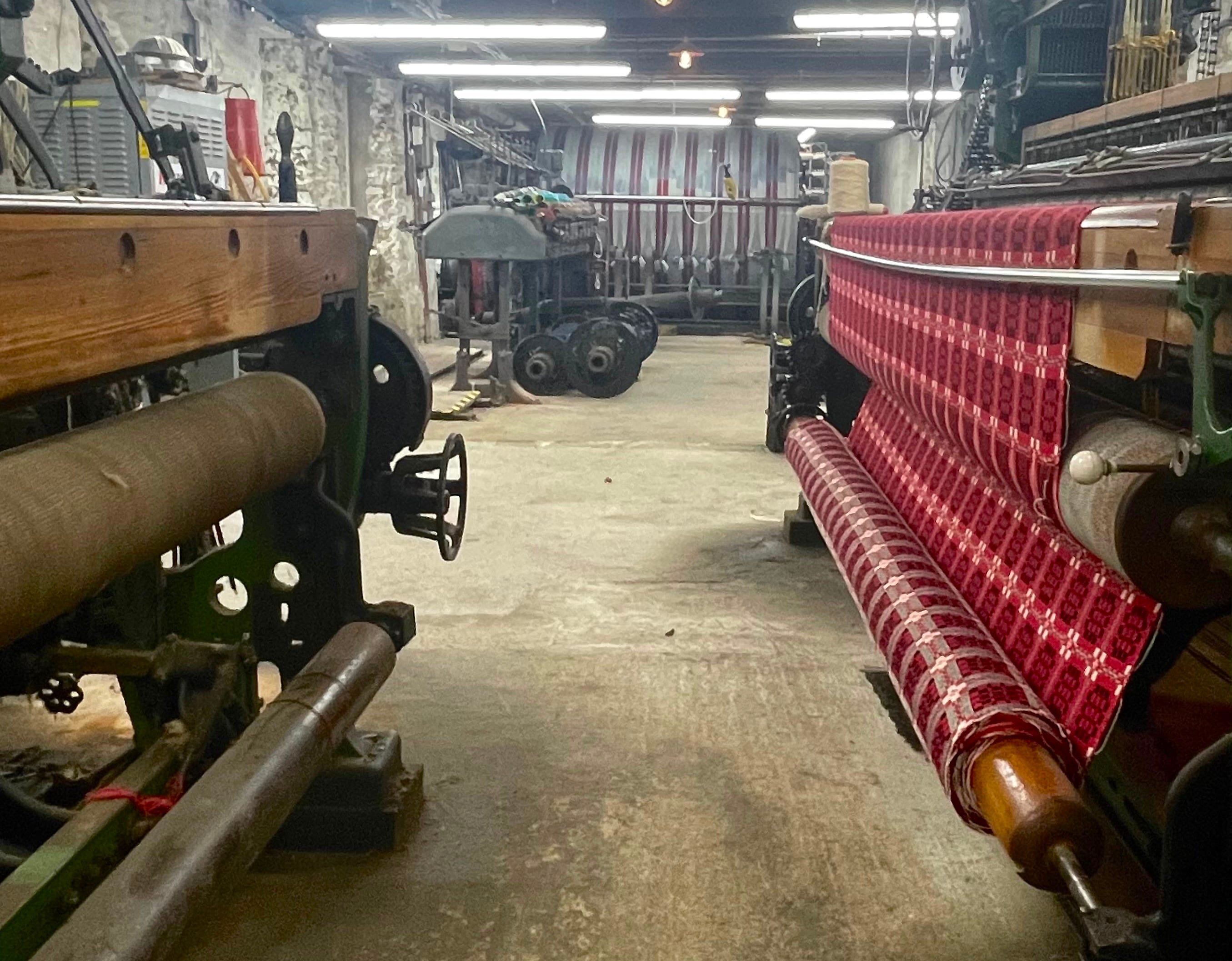
Much more to come, but I’ll sign off here with the words of the art collector and political activist, Winifred Coombe Tennant (1874-1956), who displayed both her cultural identity and her support for the Welsh textile industry by wearing traditional flannel costume at home. In 1928, she wrote an article called ‘Beautiful Things Made in Wales’:
I had slept well under the comfortable warmth of my ‘carthen’ (fringed woollen quilt), a thing of beauty woven for me by one of the few hand-loom weavers left in Cardiganshire. I looked down at its pleasant colouring - delphinium blue and maize, against a background of rich cream, and enjoyed once again the way in which the design played with the colours, now settling them against the other, and now combining them, much as the notes of music in a Bach fugue.2
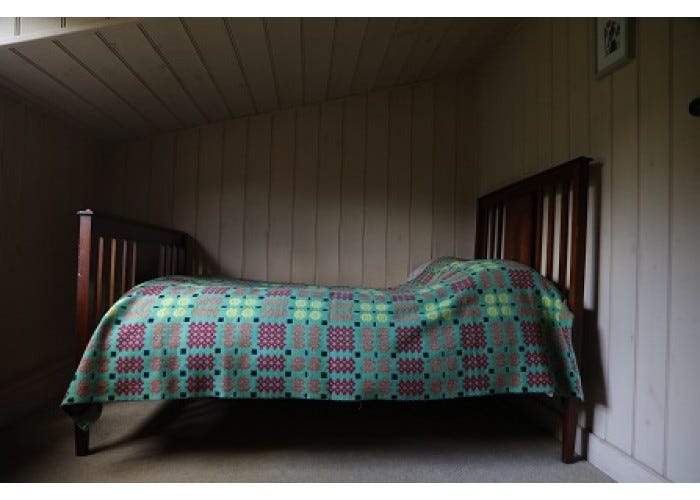
We will revisit Winifred Coombe Tennant and her love of Welsh weaving in a future piece.
Thank you for reading The Welsh Blanket.
If you enjoyed this article, please subscribe (for free - always) to read more in the coming weeks.
https://www.heritagecrafts.org.uk/skills/redlist/
Quoted in Peter Lord, Winifred Coombe Tennant: a life through art, Llyfrgell Genedlaethol Cymru, 2007. p. 77.
I’m SO pleased to see you’ve started this Substack Helen! I shall greatly look forward to reading your posts…. And I sincerely hope this may turn into a print publication? 🤞🏼
How timely! I am a hobby weaver living in the US with an interest in coverlets/folk weaving and had just started looking into the history and tradition of the Welsh blanket. Thank you so much for this introduction. Count me in as a subscriber.